Showing posts with label Online Puja Booking in Bangalore. Show all posts

Tuesday, March 21, 2017

Why Is Gudi Padwa Celebrated?


Although the standard calendar that we all follow comprises of twelve months, with January being the first month of every year, different religions and communities in India have their own distinct calendars. One such calendar is the Hindu calendar, wherein the New Year is believed to take place on the auspicious day of Gudi Padwa. This day marks the beginning of the New Lunisolar Year, and falls on the first day of the Chaitra month. It falls during late March or early April every year; this year falling on 29th of March.


Different regions – different names
Known as Gudi Padwa in Maharashtra, this festival is celebrated across the country under different names given by different religions and states. In the Konkan and Goa region, it is known as Samvatsar Padvo; in Karnataka and Andhra Pradesh it is called Ugadi; in Manipur it is named as Sajibu Nongma Panba Cheiraoba; in Kashmir it is known as Navreh; and the Sindhis call it as Cheti Chand. Whatever the festival is called, however it is celebrated, but the essence remains to be the celebration of auspicious new beginnings.

What is the legend behind the celebration of Gudi Padwa?
As per the legend, it is believed that Lord Brahma had re-created the universe on this day after the world was completely destroyed by massive floods that were called ‘Pralaya’. Lord Brahma along with Lord Vishnu, in his Matsya avatar, gave re-birth to mankind. This is why this day signifies new beginnings. Bhramadhwaj, a special flag, is hoisted on this day to honour Lord Brahma for his act of recreating the earth.
Another legend states that the raising of Brahmadhwaj is in honour of the coronotaion of Lord Rama after he returned to Ayodhya from Banvaas. Lord Rama was crowned to regain his kingdom on this day. The ‘Gudi’ that is set up on the main entrance of every devotee’s home symbolizes the sign of victory and happiness.

What is the Sade-Teen Muhurat?
When life was again created, the Golden Satyug was begun. As the name depicts, it was the era of truth and justice. As per Brahma Purana, the Hindu calendar carries a very significant period of three and a half days known as ‘Sade-Teen Muhurat’ at the onset of Satyug, wherein Gudi Padwa marks the first day. This is why people start a new business, purchase cars, sign up for properties, and start every new venture on this day.

If you are planning to start a new venture or get your hands on a new possession, don’t forget to carry out an appropriate Puja to seek blessings from God to help you in every way. If you are planning to start any kind of construction on a piece of land on this day to build up your home or office, you must perform a Bhoomi Puja to seek blessings from Mother Earth. Similarly, for any kind of purchase of a new car, new home, or new office, you must worship Lord Ganesha to bless you and stay with you throughout your relationship with your valued possession. And, don't worry about the Pujas. MakeMyPuja Pandits are always available to help you perform appropriate Pujas all through the year to help you gain blessings from God in every possible way.


Like us on Facebook: https://www.facebook.com/makemypuja/

Tuesday, March 14, 2017

Worshipping Goddess Saraswati to be Blessed with Education


With schools all set to take up examinations of students in the month of March, children are all terrified and panicking. Parents are even more anxious and worried about their children’s examinations and education. This is the time when parents and children alike start praying all the more to God to help them with the papers. Speaking of education and prayers leads us to one very important deity in Hinduism who is considered to be the goddess of education and knowledge – Goddess Saraswati.


Considered to be the divine consort of Lord Brahma, Goddess Saraswati is regarded to be one with power of speech and wisdom. She is also regarded as the eliminator of chaos and confusion, and one who brings calmness and comfort.  She is devotedly respected and regarded as the goddess of knowledge, wisdom, learning, and arts in the religion of Hinduism. Dressed in a simple white saree, and riding a white swan or sitting on a white lotus, she has the appearance of piousness and calmness. She holds four significant accessories in her four hands – the Veena Sitar signifying melody and creativity, the Vedas signifying knowledge, bead garland signifying spirituality, and a water pot signifying the reservoir of life.

Other than in India, Goddess Saraswati is worshipped as a goddess of knowledge in Nepal, Japan, Bali, Vietnam, and Myanmar too. In fact, Saraswati Puja is done in schools and other educational institutions too. She is worshipped by students and learners to accomplish their learning of education and arts. Although Vasant Panchami is considered the biggest day to worship her as it is her birthday, she is worshipped throughout the year with equal devotion by those willing to pursue any kind of learning and education. She is also worshipped by artists, mainly those related to music. If pleased, she can grant devotees with lots of knowledge, learning, wisdom and talent.

Also known as Goddess Gayatri, she is considered to be an important part of the trinity of goddesses; Goddess Parvati and Goddess Lakshmi being the other two parts. This is why people also perform the Gayatri Havan to gain spiritual energy and enlightenment of greater wisdom. There are 1,25,000 Gayatri Mantras chanted in this Puja, after a Sankalp or resolution is taken by the Pandits who are going to perform it. To be blessed with education, wisdom, knowledge, or spiritual contentment and enlightenment, you must also worship Goddess Saraswati, or have a Gayatri Havan done by hiring MakeMyPuja Pandits, who are experienced and proficient to carry out the Puja with all rituals followed correctly.


Like us on Facebook: https://www.facebook.com/makemypuja/

Tuesday, January 24, 2017

All You Would Want To Know About Griha Pravesh Puja


Since there are lots of auspicious dates this year in the months of February and March for Griha Pravesh (the day when people can move into their new house), and many people believe in such auspicious dates, there would be many of you who may be planning to shift to your new home soon. This blog is to help you learn all about this Griha Pravesh Puja, how important it is, what traditions are followed, and what all you must consider.


Religion has always played a considerable role in the life of Hindus. Whatever religion they may follow, they believe in the associated rites and rituals. In every important phase of life, Hindus are seen to be worshipping or praying to God to shower upon them divine blessings. Same is the case when shifting to a new home. Buying a new house is considered a huge milestone in a person’s life. If you have been lucky enough to achieve this milestone, and you wish to convert your house into a home, you need to fill the house with peace, happiness and fortune. And for this, it is the Griha Pravesh Puja that can help.

Griha Pravesh Puja or the House Warming Ceremony is usually undertaken to ensure that the house remains free from all kinds of negativity. The blessings of Lord Ganesha are seeked by worshipping him, praying that he blesses the home with good fortune and protects it from evil energies. The main aim of this Puja is to purify the home and its surroundings from the evil effects of spirits and all forms of negativity. The Griha Pravesh Puja involves rituals like coconut breaking, sprinkling holy water with mango leaves in the entire house, and boiling milk on the gas stove. Conch shells are blown, camphors lamps are lit, and a yagna is performed so that the air, water and entire environment is purified.

However, it is very important that this Puja is done on an auspicious date and time. As per the Lunar calendar, dates like 4, 9 and 14, and Amavasya are considered inauspicious. Also, the purity of Panchang should be considered. Generally, one must move into the house only in Shubh, Laabh or Amrut chaugadiya. You can get in touch with MakeMyPuja Pandits who will help you learn about the most auspicious date for your housewarming ceremony and will also carry out the entire Puja promisingly and in the most appropriate manner.

There are many other things that you need to consider while performing a Griha Pravesh Puja. First of all, your doors and window spaces should be fitted with shutters, and the roof must be covered. Only after completing all the procedures should one shift into the new house. Moreover, the house should not be left empty for at least three days after the Puja is done. However, if not three days, then the owners must at least sleep in the house on the day when the Puja is performed. Also remember that if the lady of the house is pregnant, or a death has taken place in the family recently, you must not hold this Puja.


Like us on Facebook: https://www.facebook.com/makemypuja/

Tuesday, January 17, 2017

Why and How to Celebrate Ganesh Jayanti?


Ganesh Jayanti, the birthday of Lord Ganesha, is known by different names across the country like Magha Shukla Chaturthi, Tilkund Chaturthi and Varad Chaturthi. It is celebrated on the fourth day of the bright fortnight in the month of Megha as per the Hindu calendar, and this year it falls on 31st of January. This festival is celebrated just like Ganesh Chaturthi that falls in the month of August/September every year. For celebrating a simple and convenient Ganesh Jayanti, you can get in touch with MakeMyPuja to help you arrange for the most professional, experienced and devoted Pandits who can help you have the most promising and fortunate Ganpati Puja.


On this festival, an idol of Lord Ganesha is brought home to be worshipped, which is then immersed in water on the fourth day after the festival. Prasad made of sesame seeds is made and is offered to Lord Ganesha, which is then distributed among the devotees. Many people observe fast on this day, believing that it will bring upon name and fame in their lives. Devotees also smear a paste of sesame on their body and then take bath with water mixed with sesame seeds. Couples generally worship Lord Ganesha on this auspicious day to beget a son.

How to celebrate an eco-friendly Ganesh Jayanti?

If you want to celebrate this festival too, you are advised to do so in an eco-friendly way so as not to harm the environment and Mother Nature. For this, there are many tips that can be followed.
·        You can use eco-friendly idols made of natural materials like paper, sand and unbaked clay, that can dissolve away when immersed in water. Moreover, you must opt for small idols that require lesser effort and time to dissolve in water.
·        You must opt for idols that are coloured with vegetable dyes, organic materials, or kumkum and haldi. Avoid those painted with synthetic paints as these colours are pigmented with lead or mercury that are hazardous to both human and aquatic life.
·        You can decorate your mandap with ‘green’ options like paper, flowers, leaves and vines. Use products that can be recycled or left safe into the water without harming the aquatic life.

Why is the idol of Lord Ganesh immersed in water?
The process of immersing the idol of the deity in water is known as ‘Visarjan’ which is a Sanskrit word for the act of respectfully requesting departure. The whole essence of Ganpati Visarjan is based on the philosophy that when the idol is immersed in water, all the components that are used to make the idol dissolve away in the water. The clay goes back to where it came from, and the flowers, leaves and turmeric serve as food for the aquatic life. However, with the increasing use of hazardous chemical substances for idols and decorations, this whole essence is lost, and the aquatic life is left to suffer. So, it is always advised to use eco-friendly idols, colours and decorations for celebrating this festival.


Like us on Facebook: https://www.facebook.com/makemypuja/

Tuesday, January 3, 2017

Book Pandits Online For All Your Poojas This Year


The New Year has begun, and it’s time to make new beginnings. This year, make it a habit to have all your personal events, office events and festivals to begin with the blessings of God. Have the most appropriate Puja done on every occasion to seek blessings of the Almighty and help you prosper. Yes, we know that this becomes a troublesome task because in spite of a large number of Pandits found in the country, it becomes difficult to find one for accomplishing your religious tasks. During the peak season, they may be booked. Or when you are able to get one, you aren’t sure if he is a reliable one.


Amidst these problems, comes a savior – MakeMyPuja – where you can easily hire Pandits online with just a few clicks and ensure that you get the most professional, genuine and reliable Pujari to have your ritual done. With an expert panel of tried and tested Pandits, we assist our clients not only to books them online, but we also take complete care of all the services related to the rituals to be performed. Up till now, looking for qualified Pandits was like standing in a long queue to buy a train ticket. But with online Pandit booking, it is like booking a ticket online!

While looking for a Pujari, people don’t know what kinds of questions need to be asked regarding his qualifications. In fact, they even hesitate to ask these questions to the Pujaris they are looking to hire. This is the reason Pandits are misusing their ignorance or regard as a means of making lots of money from them without performing proper rituals. But with MakeMyPuja, every Pandit is qualified, experienced and proficient, who knows what he is doing and will never compromise on the quality and morals of the Puja for any reason whatsoever. We also value your time and money, thus we take every care to get you the right service on time and prove to be very affordable and cost-effective.

We cover a wide range of rituals that include Bhoomi Pujan, Gayatri Puja, Griha Pravesham, Satyanarayan Katha, Car Puja, New Business Puja, Diwali Puja, Dhanteras Puja, Ganpati Puja, Durga Saptashati, Gauri Shankar Puja, Mahashivratri Puja, Janmashthami Puja, Mundan, Namkaran, Birthday, Marriage Anniversary, Mangal Dosh Nivaran, Rahu Ketu Shanti Puja, etc. Along with the Puja, we also provide all the Puja samagri that is required for every particular puja. All you have to arrange for is the prasad and fruits. So, for all your Puja and Vedic needs in 2017, experience a year full of spiritual divinity with MakeMyPuja.

Wednesday, December 28, 2016

Booking Pandits Online


How many of us have been disappointed when we haven’t been able to find appropriate Pujaris and Pandits when we really need them? How many times have our familiar Pandits said that they have already been booked for the event or occasion? You might have faced this situation quite a few times, especially during festive seasons; and it feels very disappointing. Then, we have to rush to find another Pandit. We ask our friends, relatives and neighbours if they know a good Pandit. We start making calls and pray that we get one soon. Many times we are stuck up because we have everything ready for a religious event or Puja, but no Pandit in hand. So, what do you do then?


It’s online Pandits to the rescue! Oh yes, you can look up for Pandits online. With the advent of e-age, tackling issues of booked Pandits has become easy. Finding a Pandit online when your own familiar Pandits have turned you down is like finding a hidden treasure. Finding a good Pandit for performing a puja is no difficult task anymore. Online Pandit booking has become very popular lately. So, join the league and hire a good Pandit online for important rituals to be performed on special occasions.

During peak seasons, Pujaris are very busy and booked already as they have lots of Pujas to be done every day. To overcome this, they either reduce the timing of the Puja to be performed or increase their rates. Therefore, you must be very sure while booking. You need to find Pujaris who do no compromise on this part and perform every Puja with utmost dedication so that your religious sentiments are not hurt, and you can gain immense benefits of the Puja conducted.

Why choose MakeMyPuja?
MakeMyPuja is a leading eCommerce portal that offers seamless online Pandit services. With MakeMyPuja, you are assured of getting a professional and experienced Pandit, timely service from the Pandit you book, no worries about Puja samagri, and all of this at an affordable price! You can get the best experience of Puja on your special event, may it be at home or office. So, what more can you ask for? If you are looking for a good Puja experience and a reliable Pandit, come and explore the team of qualified Pujaris at MakeMyPuja and enjoy a hassle-free booking. Any kind of Puja – festivals, personal events, company events, problem solving or custom – you can have all your requirements fulfilled. A long list of Pujas including Bhoomi Puja, Janamdin Puja, Dhanteras Puja, Laxmi Puja, Chandi Paath, Gauri Shankar Puja, Gayatri Havan, Gruh Pravesam, Janamashtami Puja, Maha Shivratri, Mangal Dosh Nivaran, Marriage Anniversary Puja, Mundan, Namkaran, New Business Puja, Rahu Ketu Shanti Puja and Satyanarayan Katha are offered under a single roof.

Monday, December 26, 2016

Importance Of Prasad in Hinduism


Every Hindu temple in India has a custom of making a small offering of sweets, fruits or other food to the deity s a mark of devotion, after which the same is distributed among the devotees to consume. It is believed that once the deity has accepted a little of the offering, the remaining part becomes sacred and blessed. The offering is elevated in status, thus transforming the edible substance into a holy material, which is then consumed with faith by the devotees as ‘Prasad’. The offering to God and the receiving of Prasad in the Hindu religion has always been of high significance and considered very holy.


So, does God actually consume the offering and bless it? If so, how does he do it because the idol in practical cannot move? To answer these questions, we first need to understand the concept. God is the infinite ocean of divine consciousness that resides all around while also being within every human. So obviously, as the idol cannot directly consume the food, it is the divine consciousness that blesses the offering. The Hindus do not actually offer the food to the idol present in the temple; they offer it to the divine consciousness. Keeping the offering at the feet of the idol is only a physical practice, but the mind and the heart know that God is actually all around us.

It is important that the Prasad be ‘satvik’ so that its sanctity is maintained. It is believed that consumption of Prasad brings positivity within us. Moreover, distributing Prasad also instills the feeling of sharing with one and all around. Even if there is only little Prasad left, it teaches us how to share even the least among all. This is because it is believed that God does not want any of his devotees to leave the temple empty-handed.

After reading this blog, you may have been convinced with the importance of Prasad and the intention behind the concept. However, there are many people who always look for a logical reasoning behind every ritual and religion. For them, the concept of Prasad can simply be stated as a give-and-take relationship. Just like a farmer considers the crops he reaps as a gift received from Nature in return to what he had sown as seeds, even the devotees believe that offering food to God will help them receive blessings. They prepare and present the offering with lots of devotion, love, happiness and positivity, and wish to receive the same in the form of blessings. Thus, this ritual is a subtle give-and-take of energies between God and the devotees. Therefore, Prasad is not a mere tradition or ritual; it is a process where the person offering it makes a connection with the deity it is being offered to.

Any kind of Puja in Hinduism is incomplete without Prasad. Whenever you hire MakeMyPuja Pujaris for having any kind of Puja done at your home/office, all you have to arrange for is this pious satvik Prasad, and the rest will be arranged by the Pujaris themselves. You get a chance to prepare for the offering on your own so that you can arrange for it with complete devotion and joy, and can present the deity what you wish to offer. If you don’t know what to offer, you can offer fruits to God too. Often, mithai, peda, halwa, and kheer are offered as Prasad.


Like us on Facebook: https://www.facebook.com/makemypuja/

Tuesday, December 20, 2016

Why Does Lord Ganesha Possess An Elephant Head


Hindu mythology believes to have 33 crore Gods and Goddesses! Different people and castes worship different deities. But, there is one amongst these millions who is always worshipped before others, and he is Lord Ganesha. He is considered to be the Lord of removing obstacles and bringing auspicious fortunes into the lives of his devotees. He is the Lord who is known by every Hindu and loved by all. The festival of Ganesh Chaturthi is celebrated with immense joy and enthusiasm not only in India, but by Hindus present all across the globe.


Lord Ganesha is always seen to be in his cute and cuddly form with an elephant head, a long trunk, two large ears, and a big round belly. He is seen riding a mouse, which is considered his ‘vaahan’, and is always seen with his favourite modak. While all the other attributes he possesses can be understood, the one unique element that cannot be empathized with is his elephant head. Why is he seen with a human body and an elephant head? Hindu mythology explains why Lord Ganesha bears an elephant head and why he is the first Lord worshipped before commencing any Puja.

The story behind Lord Ganesha’s elephant head
It was when Lord Shiva was away for meditation and his consort, Goddess Parvati, was left alone in Mount Kailash. While going to bathe, Goddess Parvati wanted someone to guard the door as Nandi was not at Mount Kailash. So, she scrubbed the dirt and oil of her skin and created a young human form figure, and breathed life into him. She asked him to guard the door and not let anyone in until she finished her bath.

In the meantime, Lord Shiva returned home and found this young child at the door, who stopped him from going in. Lord Shiva was surprised and reasoned with the child that he was Goddess Parvati’s husband and had every right to go within his home. However, the child, being very loyal to the Goddess, did not let Lord Shiva in, saying that he was only performing his duty. Furious with rage, Lord Shiva beheaded the boy with his trident, thus killing him instantly.

When Goddess Parvati learned of this, she was so enraged that she vowed to destroy the entire creation. Upon Lord Shiva and Lord Brahma trying to calm her down, she agreed to reconsider her plan on two conditions. Her first condition was that the boy should be brought back to life, and second being that he should be prayed forever before every other God. They agreed and Lord Shiva sent his clan to bring back the head of the first creature lying with his head facing North. His clan returned with the head of a young elephant, which was placed by Lord Shiva on the body of the boy, who was then brought back to life. He then announced the boy to be the leader of all Ganas (tribes and classes), which brought him the name ‘Ganpati’. Lord Brahma blessed him to be worshipped before commencing any Puja for removing obstacles and bringing luck.

This story thus depicts why Lord Ganesha has his elephant head and why he is the first God to be worshipped amongst all. This is why Lord Ganesha is prayed to at the beginning of every Puja. For any kind of festival, personal event, company event, problem solving and custom Pujas to be done, you can get in touch with MakeMyPuja Pandits to help you get the most appropriate Puja done, without failing to worship Lord Ganesha so that your Puja is done without any glitches and the objective of your Puja is accomplished fruitfully.


Like us on Facebook: https://www.facebook.com/makemypuja/

Thursday, December 15, 2016

Begin Your New Year With A Satyanarayan Katha


2016 is coming to an end, and 2017 is nearing. With the coming of a New Year, we always wish that it brings lots of joy, happiness and success for us that we haven’t seen in the past year. We also seek to have new joyous beginnings in the New Year. When the year’s end is nearing and we plan to start a business, buy a car, enter a new home, or anything that brings a new light into our lives, we attempt to begin it in the New Year. And, when we wish to begin new ventures, a majority of people believe in starting it with a Satyanarayan Katha.


This Katha is believed to be one of the most auspicious events of the Hindu calendar, and is performed before beginning any new task. It may be house warming, ring ceremony, marriage, new job, new business, or anything else – it all begins with a Satyanarayan Katha. This Puja has the boon to fulfill any wish made by the devotees who truly and wholeheartedly worships Lord Satyanarayan – the calmer avatar of Lord Vishnu.

Devotees perform this Puja to thank and pay gratitude to Lord Vishnu to light their lives with a new happiness. It can be conducted on any day before commencing a new beginning. However, the Satyanarayan Katha is generally performed on full moon days or Purnima (as called in the Hindu lunar calendar). The best months for this Puja to be conducted are Baisakha, Karthika, Shravana and Chaitra.

It is believed that when Narad Muni, the holy messenger of Heaven, visited the Earth, he found immense misery, epidemics, poverty and lust. He immediately reported all these incidents to Lord Vishnu, his Master. The Lord commanded Narad Muni to descend to Earth and teach humans to follow Satyanarayan Katha. He mentioned that whoever performed this Puja wholeheartedly with the right rituals will be honoured with eternal prosperity and happiness. This belief has led to Hindus performing this Puja on every new venture of theirs.

Whether you are going to have a new beginning soon or not, you can always have this Puja done. So, with the current year coming to an end and the New Year approaching soon, thank God for all that he has given you in the past and pray to him for more success, prosperity and happiness in the New Year by performing a Satyanarayan Katha. Get in touch with MakeMyPuja Pujaris and get your bookings done for 12th January 2017, which is the first Purnima of the New Year. Start your New Year with positivity and have a promising year ahead.


Like us on Facebook: https://www.facebook.com/makemypuja/

Tuesday, December 13, 2016

Celebrate Your Birthdays With MakeMyPuja Hereafter


Birthdays are one of the most awaited days of the year. Although it is a reason of joy and partying for children, but even adults are all smiles when the calendar turns up to the page of their birth month.


Different people have different ways of celebrating their birthday. Some want to make it the best day for their children, for which their celebrations begin right from sunrise up till midnight. Others plan up a party for their child at home with their friends invited over for cake-cutting and snacks or dinner. When it comes to adults, some celebrate by partying hard at the night club; others go for a movie followed by a meal with friends; while there are others who only want time with family. But, how many of us celebrate our birthday with God – the Lord who gave us the opportunity to have this day in our lives? Many of you would say you start your day by going to the temple and thanking God for the wonderful day he has brought into your life. But, is that all you can do?

Well, MakeMyPuja says there is a better way to spend time with God, thank him for the wonderful life he has given you, and seek his blessings on your special day. When you are born, your horoscope is generated by a Pandit after considering your date, time and place of birth. It is the stars in your horoscope that decide the rest of your life and fate. But, not all stars in your horoscope are in your favour. While there are a number of Pujas you can perform to get rid of the negative effects of the nakshatras in your horoscope, performing a Birthday Puja will help you thank God while also praying to him to remove negative hurdles from your life.

Make your birthday sacred and special with a Birthday Puja. Thank God for giving you the life you have. Seek blessings for physical well-being, peace, contentment, success and prosperity. A Birthday Puja brings in lots of benefits like removing negative hurdles from your life, bringing prosperity, physical and mental welfare, a fresh new start to life, and blessings for a longer life. This Puja begins with the Ganpati Sthapna, followed by Navagraha Sthapna, Kalash Sthapna, Deep Prajjawalit, Shodhashopchar Puja, and Aarti. One can also perform Satyanarayan Puja to offer gratitude to the great Lord Vishnu, who is the caretaker of the Universe and all its elements.

So, this New Year 2017, take a resolution to celebrate your birthday every year by devoting some time to God and performing a Birthday Puja. You can make it a practice for the birthdays of every member in your family to bring peace, success and well-being in your home.


Like us on Facebook: https://www.facebook.com/makemypuja/

Thursday, December 8, 2016

Get Your Child’s Mundan Done With MakeMyPuja


Hinduism has innumerous rituals, traditions and customs that are followed, starting right from the birth of a child. It begins with the ‘Namkaran’ ceremony of the child, where the child is named as per his horoscope made by the priest. Another very important ritual performed in the initial stages of childhood is the ‘Mundan’. This is an ancient ceremony followed by the Hindus where the hair from the child’s head is shaved off for the first time after birth. This ritual is performed for both boys and girls even today very religiously.


Why should we perform the Mundan ceremony?
According to Hindu scriptures, it is believed that a soul passes through 84 lakh yonis, before it acquires the human body. Every yoni has a certain influence on the current birth of the baby. This ritual is thus performed believing that doing so will have the child get rid of all the bad qualities and sins of the past lives, and it helps the child begin his or her life afresh. By shaving off the hair, the residue of the past lives is left in the past, and does not affect the current life. Thus, Mundan is a purification act performed to ensure that the baby is cleansed of all the unwanted and undesirable elements of the past births. Another belief is that the Mundan is done to get better hair growth in the future.

When should the Mundan be performed?
It is believed that the ritual can be performed in only an odd month and odd year. The 1st, 3rd, 5th and 7th years are considered perfect for the ritual. However, some people believe that it should be done either in the first year itself, and not later than that, while others wait for 5 years before having it done. It is the Pandit who decides the date on which the Puja for your child should be performed, in accordance with the position of the Nakshatras. You should consult MakeMyPuja Pandits to let you know the auspicious date and month for your child’s Mundan.

How is the Mundan ceremony performed?
This Puja can be performed either at home, or in a temple, or at the banks of a sacred river. The Pandit called for performing the ritual starts the Puja with a Havan, and then shaves off a part of the child’s hair while chanting some mantras. The rest of the hair is shaved off by the barber. The head is then shaved off with Gangajal, and the hair is offered to a deity or the River Ganga.

What are the benefits of the Mundan ceremony?
The Mundan ceremony has many religious benefits like removing unpleasant qualities that the baby might have had in his earlier births, shielding the child from negativity, and promising a good future for the child, along with improving hair growth. Some people also believe that this ceremony triggers the intellectual area of the child’s brain, which helps its better development.


Like us on Facebook: https://www.facebook.com/makemypuja/

Thursday, December 1, 2016

Have Your Child’s ‘Namkaran’ Done With MakeMyPuja


Namkaran Puja is one of the most important Pujas of Hinduism, which is the first Puja of a newborn child. ‘Naam’ meaning Name, and ‘Karan’ meaning To Imply, the word Namkaram means to decide the name of a newborn that has an effect on his life. This is a religious practice of naming a child and initiating him into Hinduism. This ritual is considered of prime importance to shape the character and upbringing of a child. It is an attempt to instill the child’s life with blessings so that he can live a happy and peaceful life, following the heredity of his ancestors.


The Namkaran Puja is performed on the 10th or 12th day after the baby is born as per the muhurat suggested by a Pandit. In case the ritual cannot be performed on these days, the family has to wait for the 101st day or the baby’s first birthday to name their child. The ceremony is directed and lead by a Pandit where all the family members and relatives gather together for a joyous celebration and to welcome and bless the new member of the house. It can be carried out either at a temple or even at home, as a small private affair. The Pandit prays to Lord Ganesh to bestow upon the child both happiness and a long life. During the ceremony, he also draws out the child’s horoscope that depicts all the positive and negative aspects of the child’s life. At the end of the ceremony, the child is named with one of the initials that is favourable to his horoscope.

However, there are certain guidelines provided by the Vedas and Sutras that need to be followed while naming a child. Firstly, the name should be positive, easy to pronounce and should sound pleasant. It should indicate the sex of the child and signify the stature and social standing of the family. Another important aspect is that it should contain the specific number of vowels and letters as per the sex of the child. Moreover, the Pandit who leads the ceremony draws up a horoscope of the child and gives away the initials to be used for the child’s name that are favourable as per his/her nakshatra. It is a must that you use any of those initials to name your child if you want the name to prove successful for him/her for his entire life.

Performing a Namkaran Puja as per the rituals, and abiding by the religious rules of the Vedas, will bring lots of benefits into the child’s life. It increases the auspiciousness of the name selected for the child, and brings good luck, fortune and success into his life, by nullifying any kind of negative effects.

So, if you are expecting a baby soon, make sure to get in touch with MakeMyPuja Pandits well in advance so that you don't have to rush to find a priest at the last moment. Conduct the Namkaran Puja with 100% purity and involvement to bring good fortune to the baby and make the little one’s life blessed!

Thursday, November 24, 2016

Satyanarayan Katha With MakeMyPuja


Satyanarayan combines two words ‘Satya’ and ‘Narayan’ meaning Truth and Lord Vishnu respectively. This is why the name for the Puja that worships Lord Vishnu to appease him and gain his blessings is Satyanarayan Katha. Lord Vishnu is the caretaker of the Universe and all its elements, and Satyanarayan is his calm and generous avatar; thus this Puja is done to appease him so that he helps overcome all sorts of unfavourable situations. This Puja is done with lots of faith, joy and merriment.


When is Satyanarayan Katha performed?
For every successful phase in life like buying a home, buying a vehicle, successfully completing a phase of education, starting a new business, getting a new job, or anything else, the Satyanarayan Katha is performed to offer gratitude to the Lord and because it is believed to bring in good luck and fortune. Other than these special occasions, one can also perform this Puja to maintain peace, harmony, joy and prosperity in one’s life. So, whether you have a particular goal in life or not, you can have this Puja done for general well-being and prosperity, and to ward off any sort of evil or ill-effects of bad karma. And, what’s more? This also becomes a reason for gathering of friends and family, who together sing the praises of the Lord.

Which is the best ‘muhurat’ for performing Satyanarayan Katha?
As mentioned above, there is no specific day or date assigned for the Satyanarayan Katha; it can be performed whenever a happy phase comes into your life. However, it is better to get in touch with a Pandit and ask him for an auspicious date that falls in the near future. According to the Hindu calendar, there are many auspicious days that are considered as good muhurats by default. These include the full moon day of every month, Ekadashi of every month, Sankranti, and days of solar eclipse. The most auspicious months are Kartik and Vaishakha. So, if your goal is achieved near any of these good days, make sure you utilize their benefits and hire MakeMyPuja Panditjis to help you perform the Satyanarayan Katha in the most appropriate and constructive way.

What is the story behind Satyanarayan Katha?
We know when a Satyanarayan Katha can be performed and the good muhurats for the most positive effects. But, what we don’t know yet is why this Katha is believed to be so fruitful. The story of Narad Muni and Lord Vishnu, as per the Hindu mythology, depicts the fact that offering prayers to Lord Satyanarayan can end all kinds of sufferings. It was once when Narad Muni visited the Earth and saw people suffering from various problems that were brought upon them by their own bad karmas. When he shares this with Lord Vishnu, the Lord tells him that anyone who performs Satyanarayan Katha will be able to fulfill his desires and attain salvation after death. Ever since, this Puja has been performed with faith and devotion.


Like us on Facebook: https://www.facebook.com/makemypuja/

Thursday, September 8, 2016

Amazing Facts About Lord Ganesha That You May Not Know


A symbol of wisdom and luck, Lord Ganesha is one of the most worshipped Gods in Hinduism. The son of Lord Shiva and Goddess Parvati, with the face of an elephant and a huge pot-bellied body of a human, Lord Ganesha is regarded as the destroyer of obstacles. In fact, any festive occasion or new beginning for a Hindu almost always begins with worshipping Lord Ganesha. If you are opening a new office, or getting into a new home, or for any other new beginning that marks importance in your life, make sure to have a Ganpati Puja done by the most professional and experienced Pujaris at MakeMyPuja.


Moreover, it is the time of the year when everyone is celebrating the auspicious Ganesh festival with immense zeal and joy. As India celebrates this auspicious festival, let us take a look at some interesting yet lesser known facts about Lord Ganesha. We all know who Ganpati Bappa is and worship him with lots of love and faith but, how much do you know about him? Read on to find out!

How was Lord Ganesha born?
Goddess Parvati once went to visit her husband, Lord Shiva, who was deeply meditating. Since he did not want to be disturbed by any reason whatsoever, he had his head attendant, Nandi, to guard and keep away anyone who wanted to visit him. Nandi being very loyal to Lord Shiva did not even let Goddess Parvati meet him. This hurt her feelings and had her feeling very lonely, being ignored by her husband. So, she decided to have someone who would be by her side anytime she needed someone. This is why, there and then, she collected some dirt from her body and moulded the most handsome young boy she could imagine, and breathed life into him to be her beloved son. This is how Lord Ganesha was born!

Why does Lord Ganesha have a broken tusk?
Have you realized that Lord Ganesha ha one full and one broken tusk? And, do you why? This is another instance when Lord Shiva was meditating. This was when a family friend Parashurama had come to visit. Lord Ganesha who was guarding his father did not let him in. Parashurama lost his temper and threw an axe at Ganesha, which broke his tusk!

Why do we find the idol of Lord Ganesha at the entrance of every temple?
This is because it was a boon granted to him that he would be more revered and worshipped than his parents, and he would be the first God to be acknowledged when entering a temple.

What is the original colour of Lord Ganesha’s body?
According to Shiva Maha Puran, Lord Ganesha is actually green and red in colour.

Who began the system of Sarvajanik Ganesh celebration?
In 1893, it was revolutionary freedom fighter Bal Gangadhar Lokmanya Tilak who prompted every Indian to come together to celebrate the festival of Lord Ganesha. The main aim behind this was to bring together the sects of Brahmins and non-Brahmins to instill the feeling of unity amongst every Indian so that they could stand united against the Britishers.

How many idols of Lord Ganesha are made and brought home every year?
He largest processions and worships seen are in Maharashtra, mainly Mumbai and Pune. Apart from them, the Pen district also has 500 workshops and 800 artisans who make more than 7 lakh idols every year! Last year, 10,000 idols were seen in the pandals of Mumbai alone. As per a survey, there were 1,80,650 idols brought home last year.

Amazing facts, isn’t it? So now, after knowing these facts, you will better worship Lord Ganesha for sure. Happy Ganesh Chaturthi! Ganpati Bappa Morya!


Website: https://www.makemypuja.com/

Like us on Facebook: https://www.facebook.com/makemypuja/

Thursday, August 18, 2016

The Significance Of Krishna Janmashtami


There are more than 900 million people around the world who worship Lord Krishna and celebrate the festival of Janmashtami with utmost joy and enthusiasm! It is believed that Lord Vishnu reincarnated as Lord Krishna on this auspicious day and took birth on this planet, which is why this fortunate day is celebrated.


This festival of Janmashtami is celebrated with great pomp and show in cities of Mathura, Vrindavan, Gokul and Dwarka as these cities are the most significant cities of the era of Lord Krishna. During this festive occasion, devotees place the image or idol of baby Lord Krishna in a swing or cradle called the ‘paalna’, and swing him throughout the celebration that starts at midnight and goes up for hours together. This celebration is observed in every temple of Lord Krishna and in the homes of devotees. Homes and temples are decorated with lights and garlands to spread the illumination and fragrance of the festival all around. The celebrations involve singing devotional songs, bhajans and Krishna Aarti while dancing and enjoying. There are also many other ways of celebrating this auspicious day. People perform garba signifying ‘Raas Lila’ – the flirtatious aspects of Lord Krishna’s youthful age. Other competitions and programs are held too. Children are dressed up like Bal Gopal to be a part of costume and fancy dress competitions. ‘Jhankis’ are shown that beautifully depict the different life events of Lord Krishna.

Apart from this kind of rejoice and merriment, Lord Krishna is also worshipped with complete devotion. The ‘abhishek’ is performed with honey, curd, milk and Gangajal. Then, Bal Gopal is dressed in new clothes and decorated with precious jewels, flowers and garlands. After worshipping and performing the Aarti, prasad is distributed among the devotees. The main items of prasad include coconut barfi, peanut burfi and milk. Thousands of devotees gather at various temples to worship Lord Krishna on this day and gain the benefits of having prasad.

This year, this grand event falls on the 25th of August, which is just a few days away. So, gear up and get all ready to worship Lord Krishna and take part in the events that are coming up in the temples near you. If you are a devotee of Lord Krishna, and are willing to perform a pooja at home on this auspicious occasion, you can get in touch with MakeMyPuja Panditjis to experience spiritual divinity with complete blissfulness and devotion. So, feel connected to Lord Krishna, the absolute truth, with highly qualified, experienced and proficient experts from MakeMyPuja who will help you celebrate Krishna Janmashtami at home with the most appropriate and beneficial rituals. You will be sure to achieve eternal peace and live life with utmost peace and tranquility.


Website: https://www.makemypuja.com/

Like us on Facebook: https://www.facebook.com/makemypuja/ 

Tuesday, August 16, 2016

The Significance And Purity Of Raksha Bandhan


‘Raksha Bandhan’ meaning the bond of security is a pledge exchanged between a brother and sister to strengthen the warm relationship they share. This festival also strengthens their bond against all ills and odds.

The sacred festival of Raksha Bandhan is celebrated on the divine day of Shravan Purnima every year. This year, it falls on the 18th of August, which is just round the corner. Although we have been celebrating this festival since childhood where sisters tie rakhis to their brothers after applying tilak on his forehead and doing his aarti, but how many of us actually know why this festival is celebrated?


This festival dates back to the Vedas when Lord Vishnu pledged to protect the kingdom of King Bali, one of his great devotees, for which he left his normal abode to move to Bali’s kingdom. This is when Goddess Lakshmi tied a rakhi onto the wrist of Bali, making him her brother, and requesting him to liberate Lord Vishnu so that she could take him along with her. King Bali being touched by her affection liberated Lord Vishnu so that he could move back to his own abode with his consort. That day was Shravan Purnima, which is why the festival of Raksha Bandhan is celebrated on this day of the Hindu lunar calendar every year.

On this day, sisters tie a rakhi on their brother’s wrist promising to pray for his protection. In return, the brother gives her a small gift and promises to protect her throughout her life. The rakhi here is the symbol of the relationship’s purity, and the gift, a token of the brother’s love. Apart from the sisters tying rakhi to the brothers, it is also a very sacred day for the sages. It is believed that this day bestows boons and ends all sins, which is why sages tie a sacred thread to themselves to safeguard them from all evils.

Since this festival is celebrated on such a divine day, it is believed that on this day, the frequencies of Lord Ganesh and Goddess Saraswati reach the Earth in greater quantities. This is why many people across the country perform many different kinds of rituals on this pious day. You may worship Lord Ganesh, Goddess Saraswati and Goddess Lakshmi on this day. If you are looking forward to get rid of all evils and sins from your life till date, you can get in touch with MakeMyPuja Pujaris who will help you to perform the most appropriate pooja for you and your family.


Website: https://www.makemypuja.com/

Like us on Facebook: https://www.facebook.com/makemypuja/

Thursday, August 11, 2016

How Can Lord Shiva Be Pleased?


Lord Brahma, Lord Vishnu and Lord Shiva form the ‘Trimurti’ that is worshipped in Hinduism. Lord Brahma is known as the creator of the universe, Lord Vishnu is the preserver and Lord Shiva is known as the destroyer.


Lord Shiva is the most important God of the Hindu religion, who has many forms and is known by many names. Although he has 108 different names as per the Hindu mythology, here is a list of the most common names he is known by, along with their meaning.

·        Mahadev – the greatest of all Gods
·        Mahakaal – the Lord of eternity
·        Bholenath – the one who has a childlike innocence
·        Satyam – the only truth
·        Shivam – the auspicious
·        Sundaram – the beautiful and holy
·        Ashutosh – the one who is delighted with little efforts

To please this holy, auspicious, true, greatest of all and the Lord of eternity, even a simple ‘Abhishek’ is enough because as his name depicts, he is the one who is delighted by simple efforts. And, with his childlike innocence, one can easily please him by only offering him a pot of water or milk on the Shivlinga. Every Shiv temple has a copper or brass pot with a hole in it, hung over the Shivlinga so that water falls from it on the lingam throughout the day to keep Lord Shiva pleased.
It is believed that whoever worships Lord Shiva with an earnest heart can get his desires fulfilled. Worshipping Lord Shiva devotedly also helps in attaining moksha, which is the liberation from the cycle of birth and death. This is because worshipping him leads to the path of salvation from worldly desires through self-awakening. Lord Shiva is worshipped by his devotees for marital bliss, financial stability and success.

However, if you want to perform a Shiv Puja with ancient Hindu rites and rituals, you will need assistance from professional Pujaris. The Pujaris at MakeMyPuja can help you with the most professional and fruitful puja to help you achieve success and wealth. If you are facing any sort of obstacles for getting married or if you have any sort of problems in your married life, MakeMyPuja Pujaris will make sure to perform the most appropriate Shiva Puja rituals to help you get rid of all the obstacles and lead a happy married life. Rudra Abishekam is a very important form of Shiv Puja that is believed to help get rid of past sins and bring in peace, wealth and success. Other than these pujas, other horoscope hindrances like Rahu Dosh, Ketu Dosh, Naag Dosh and Vish Dosh can also be removed by seeking the blessings of Lord Shiva.

Shiv Puja in any form is believed to bless us with a happy, peaceful and successful life by freeing our souls of past sins. While Monday is generally when Lord Shiva is worshipped, he can be offered water and milk any day. Moreover, in this holy Shravan month, you have the chance to please him the most!


Website: https://www.makemypuja.com/

Like us on Facebook: https://www.facebook.com/makemypuja/

Tuesday, August 9, 2016

Why Do We Worship Lord Shiva If He Is Said To Be The Destroyer?


Lord Shiva is one of the most important Gods in Hinduism. He is believed to be one of the three entities of the holy Trimurti. Lord Shiva has many forms and is called by many names. Moreover, Lord Shiva is considered to be very complex because on one hand, he is known as the Protector because he protects holy texts or the Vedas, while on the other hand, he is also known as the Destroyer. One side of him shows his representation of the good things and his compassionate and generous character. And, another side of him is believed to be a leader of ghosts, vampires and evil spirits.


Why is Lord Shiva known as the Destroyer?
In spite of being the God of Hinduism, why Lord Shiva is known as the Destroyer, you may wonder. In Hinduism, it is believed that the universe regenerates in a cycle of every 2,160,000,000 years. And, at the end of each cycle, Lord Shiva destroys the entire universe, which makes way for a new creation to come into being. As a destroyer, Lord Shiva is represented in the form of Nataraja, where he performs the ‘pralaya tandava’ or the cosmic dance of destruction.

If he is the Destroyer, why is he worshipped?
Lord Shiva’s mannerism of destroying the universe can seem like a negative characteristic to many. But thinking deeply, one can realize that destruction may not always mean negativity. Think of it like light destroying darkness, and education destroying ignorance. Much in the same way, moksha destroys the cycle of death and rebirth. When all of this is understood, the trait of destruction will no longer seem to be negative.

How to worship Lord Shiva?
Lord Shiva can be worshipped throughout the year by offering water and milk to the Shivlinga. However, the purest month of worshipping him is during the Shravan month. And, the most important day of them all is the Shravan Purnima, falling on 18th August this year, which is known by different names in different states of India. It is known as Narali Purnima in the West, Pavitropana in Gujarat, Avani Avittam in the South, and Kajari Purnima in Madhya Pradesh, Jharkhand and Chhattisgarh. So, if you are looking for any sort of special kind of pooja to be perfomed on this auspicious day, you may hire the most professional and beneficial services of MakeMyPuja Pujaris to have it done for you.

Other than this, you may offer water and milk along with ‘bilva leaves’ to the Shivlinga every day during the entire month. You may also observe fast throughout the month or only on Mondays. You may observe a strict fast wherein you consume nothing at all, or a partial fast where you are permitted to consume only fruits and juices. Some devotees also practice Maun Vrat, which means that they do not utter a single word for the entire day, with an exception of chanting the ‘Maha Mritunjaya Jaap’.


Website: https://www.makemypuja.com/


Thursday, August 4, 2016

Importance Of Kanwar Yatra During The Shravan Month


Have you heard about the Kanwar Yatra? It’s a very unique kind of tradition that Shiv devotees follow during the month of Shravan every year. Devotees pay an annual pilgrimage to the holy places of Haridwar, Gaumukh and Gangotri in Uttarakhand, and Sultanganj in Bihar to fetch the holy water of River Ganga. This water is then offered at their local Shiv temples.

The devotees who perform this ritual are known as ‘Kanwariyas’. They are clad in saffron clothes and travel a distance of around 100 kilometers barefooted! These include hundreds of thousands of devotees from Delhi, Uttar Pradesh, Rajasthan, Punjab, Bihar, Haryana, Madhya Pradesh, Jharkhand and Chhattisgarh. They carry a ‘Kanwar’ on their shoulders, which is a bamboo pole with two covered water pots fastened on either side. While most pilgrims are men, a few women and children are also seen participating in this Yatra. During their journey, these devotees chant “Bol Bam, Bam Bam” or “Har Har Mahadev” together.


What is the story behind the Kanwar Yatra?
According to the Hindu mythology, during the churning of the ocean, Lord Shiva drank all the poison that had come out to save the world from getting destructed. He held all the poison in his neck, which is why his neck turned blue and thus the name ‘Neelkanth’ given to him. It is believed that the king Raavan offered Lord Shiva the holy water of River Ganga to lessen the effect of the poison. It is since then that devotees have been offering Gangajal on Shivlings in Shiv temples. This is why during this holy month, devotees walk barefoot to bring Gangajal and offer it to Lord Shiva as a gesture of thanksgiving.

What are the benefits of this Yatra?
First and foremost, devotees believe that bringing Gangajal from the holy river and offering it to Lord Shiva makes him happy, due to which he fulfills all their wishes and blesses them profoundly. Moreover, it is believed that this Yatra helps in the progression and development of our personality and individuality. It also increases our willpower and confidence. We are able to recognize our strengths, caliber and potentiality through this Yatra.

What are the limitations for the Kanwariyas?
During this procession, the Kanwariyas are bound by certain rules that are a must to be followed. It isn’t easy to walk 100 kilometers barefoot; moreover these restrictions make the pilgrimage even more difficult. But, devotees who trust Lord Shiva have enough confidence and strength to carry out this procession happily.
·        Kanwariyas need to be bathed before starting the procession but, they are not allowed usage of any kind of oil, soap, comb or any kind of beautifying products during the pilgrimage.
·        Kanwariyas are not allowed to consume any kind of non-vegetarian food, alcohol, tobacco and any other toxins during the period of procession.
·        Kanwariyas are allowed to sit only on bare ground and are not allowed to use any kind of vehicle too. Moreover, they are not permitted to touch any kind of leather items too.
This procession seems to be a must watch! If you are a Shiv devotee, you may also participate in this Yatra between 20th July and 25th August this year. Other than the Shravan month, this ritual is observed in high numbers during Basant Panchmi and Maha Shivratri too. Approximately 2 crore devotees perform this holy journey every year!

However, if you are not going anywhere and wish to perform rituals during this holy month in your own city (Bangalore), you can get in touch with MakeMyPuja to hire the most professional and experienced Pandits to assist you.


Like us on Facebook: https://www.facebook.com/makemypuja/

Tuesday, August 2, 2016

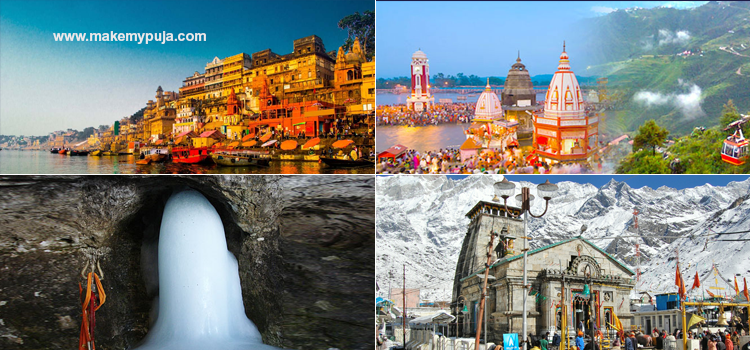
Places To Visit During The Month Of Shravan


We all that Shravan Maas is a month of the Hindu calendar that is dedicated to Lord Shiva. This is the holiest month of the year for the Hindus and is considered the most auspicious. By performing Shiv Puja every day during this month, it is believed that our body, soul, mind and senses are purified through the rituals dedicated to Lord Shiva. You may perform the rituals of the Shravan Maas under the guidance of qualified MakeMyPuja Pujaris to make sure that you are performing it the right way.

These rituals can be performed in any temple located near your home or in one of the most significant Shiv temples in your city. But, there are some distinctive temples across the country that you may visit during this month to visualize the true spirit of the worship and the devotees. These places are considered to be the most special and of great importance to Lord Shiva.


Varanasi
One of the famous and top pilgrimage sites in India, Varanasi is considered as one of the most important centers of faith for the Hindus. Considered as one of Hinduism’s seven holy cities, Varanasi is considered as the city of Lord Shiva. This city includes one of the Shakti Peeths and one of the twelve Jyotirlinga sites in India, which is why it is believed to have the power of washing away all of one’s sins. Varanasi is set by the holy river Ganga, which undoubtedly increases the beauty of the city. This is a place where you can see innumerous temples at every little distance, thus it is also known as the “City Of Temples”. When you visit this city, don’t forget to pay a visit to the Kashi Vishvanath Temple, which is one of the famous temples of Lord Shiva.

Haridwar
Haridwar meaning “Gateway To God” is located in Uttarakhand, which is considered as one of the best place by every devotee of Lord Shiva. Located by the holy river Ganga, this sacred town bestows great peace of the mind and soul. Moreover, Haridwar is one of the four holy places where drops of the Amrit had fallen during the churning of the oceans, as per the Vedic philosophy, which is why the Kumbh Mela is held here once in every 12 years. Millions of people from across the globe visit this city during the Kumbh Mela but, it is a place that should also be visited during the Shravan Month. During the evening, you can see the whole river sparkling with diyas floating over it.

Amarnath Cave
Located in Jammu and Kashmir, this Hindu shrine is one of the most important parts of Hinduism and worshipping of Lord Shiva. This is a place that every Shiva devotee goes for a trek to receive countless blessings from Lord Shiva. The cave is covered with snow most of the year and is mostly open in the month of Shravan only. It is believed that it was this cave that Lord Shiva had chosen to narrate the secrets of immortality and creation of the universe to his wife Goddess Parvati.

Kedarnath
Kedarnath is also situated in Uttarakhand and is one of the most sacred pilgrimage sites of Lord Shiva. It is the highest of all the twelve Jyotirlingas. The word ‘Kedar’ means powerful, which is another name for the protector and destroyer – Lord Shiva. However, because this Jyotirlinga is situated in the snow-covered area of the Himalayas, it can be visited only during six months in an year – between April to November. The rest of the year, it gets too cold here when the Himalayas are covered with snow, thus the Kedarnath Temple remains closed for pilgrims.


So, do visit any of these places if you are planning to travel during the Shravan Month to receive great blessings from Lord Shiva. However, if you are planning to perform the rituals in your own city Bangalore, make sure to get in touch with MakeMyPuja who will help you with the best Puja services to get your rituals done right.